We are sharing an article by our member Umberto Gallo, which appeared in the latest issue of the magazine Peregrino. The article was particularly appreciated by C.E.C. members for highlighting this fundamental aspect of the work carried out by the Saint James associations and, by extension, by Camino Europa Compostela.
The phenomenon of walking, in Italy and across Europe, is experiencing exponential growth, establishing itself as an experience of wellbeing, spirituality and sustainability. There were over 200,000 walkers in Italy in 2024, with numbers rising even further in 2025, partly driven by the Jubilee.
The reasons for this success, which received a significant boost in the post-pandemic period, are simple: long walks are a form of meditation in motion; they reduce anxiety and lower cortisol levels, allowing one to gather one’s thoughts and achieve a sense of inner peace. Consequently, many are channelling their holidays and leisure time into experiential journeys which, whilst respecting the environment, also help to promote villages, local traditions and food and wine. You find yourself immersed in nature, far from toxic environments: the urban setting and the digital world. A zero-emission journey which, in inland areas, creates opportunities for cooperation and local hospitality. Well-signposted trails and accommodation facilities (particularly hostels) make this experience accessible to all, helping to avoid so-called ‘overtourism’ with its dramatic consequences for the local areas and social systems involved.
In addition to traditional devotional pilgrimages, such as the Via Francigena or the Camino de Santiago, people choose walking as an opportunity for personal growth, to experience the silence, or as a physical challenge—accessible to all—to try to push beyond their limits. The profile of walkers is increasingly diverse and international, but women account for a significant and steadily growing proportion, driven by a desire for safety, shared experiences and introspection.
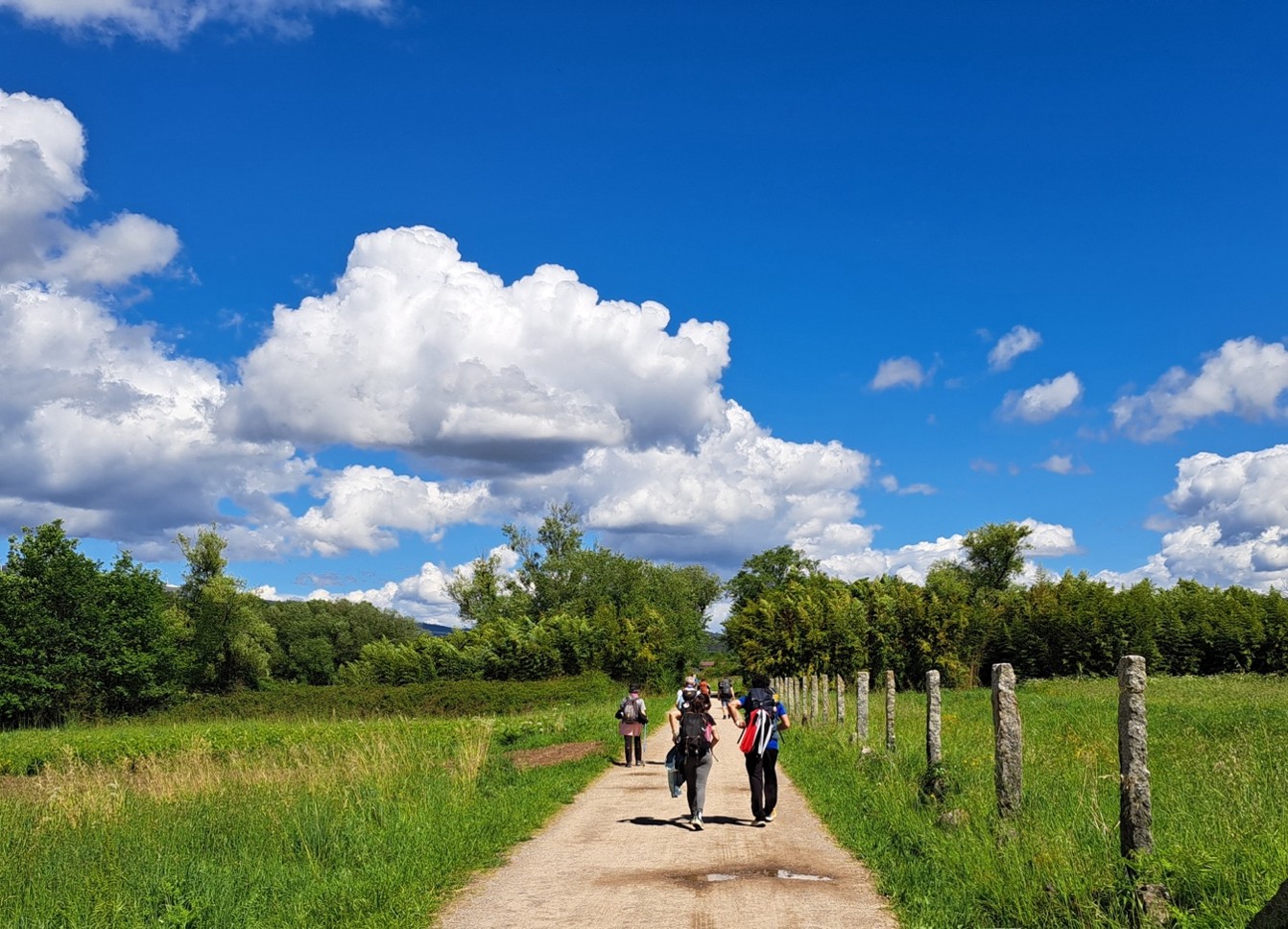
It is in the natural rhythm of human beings to walk at a speed of four kilometres per hour, relying solely on their own strength: anxiety fades away along with obsessive thoughts. Those who walk rediscover their identity and their place in the world. The rigours of the journey and the challenges posed by the weather teach us to support and encourage one another, leading us to rediscover the necessity and value of travelling companions.
Other beneficial side effects, along the more traditional routes of our Europe, are of considerable importance for the conscious development of the social fabric. The intercultural society in which we live is fostered by the breaking down of barriers brought about by shared exertion and the simplicity of encounter, creating sincere bonds that transcend social differences. The encounter between different worlds and cultures finds, on these trails, spaces for exchange amongst European citizens from other continents; no one is a stranger any longer, everyone is a brother or sister in search of meaning, with a keen focus on the essential values of life. Interculturalism is, in this context, a practice of constant training in dialogue and effective relationships with others.
Those who choose the experience of walking and slow, sustainable tourism hold dear values ranging from respect for animals to a form of sustainable diet that does not jeopardise the future of the environment, a strong focus on human rights and hospitality, and a mindset of peace and non-violence.
Those involved in promoting, maintaining and welcoming visitors along slow tourism routes and traditional walking trails must pay attention to the educational and formative aspects necessary to manage the complexity of multi-ethnic societies, in order to bring stability and strength to these relationships, transforming diversity into a tangible resource for work and leisure.
The Intercultural Walk is made up of practical aspects and personal attitudes. Simplicity and moderation lead each person to find themselves in the other: class distinctions, social status differences and assumptions of cultural superiority fall away; this is not a levelling down but a search for simple and universal human values. The journey begins by shedding the superfluous to focus on the essential: minimal equipment reduces the social distances created by material possessions. Resources are shared, with food and equipment pooled together, fostering mutual aid right from the start. We rediscover a direct connection, the pleasure of dialogue as an exchange of information and cultural elements. A digital disconnection takes place, with the use of devices restricted to help restore inner balance in a frenetic, technology-driven world.
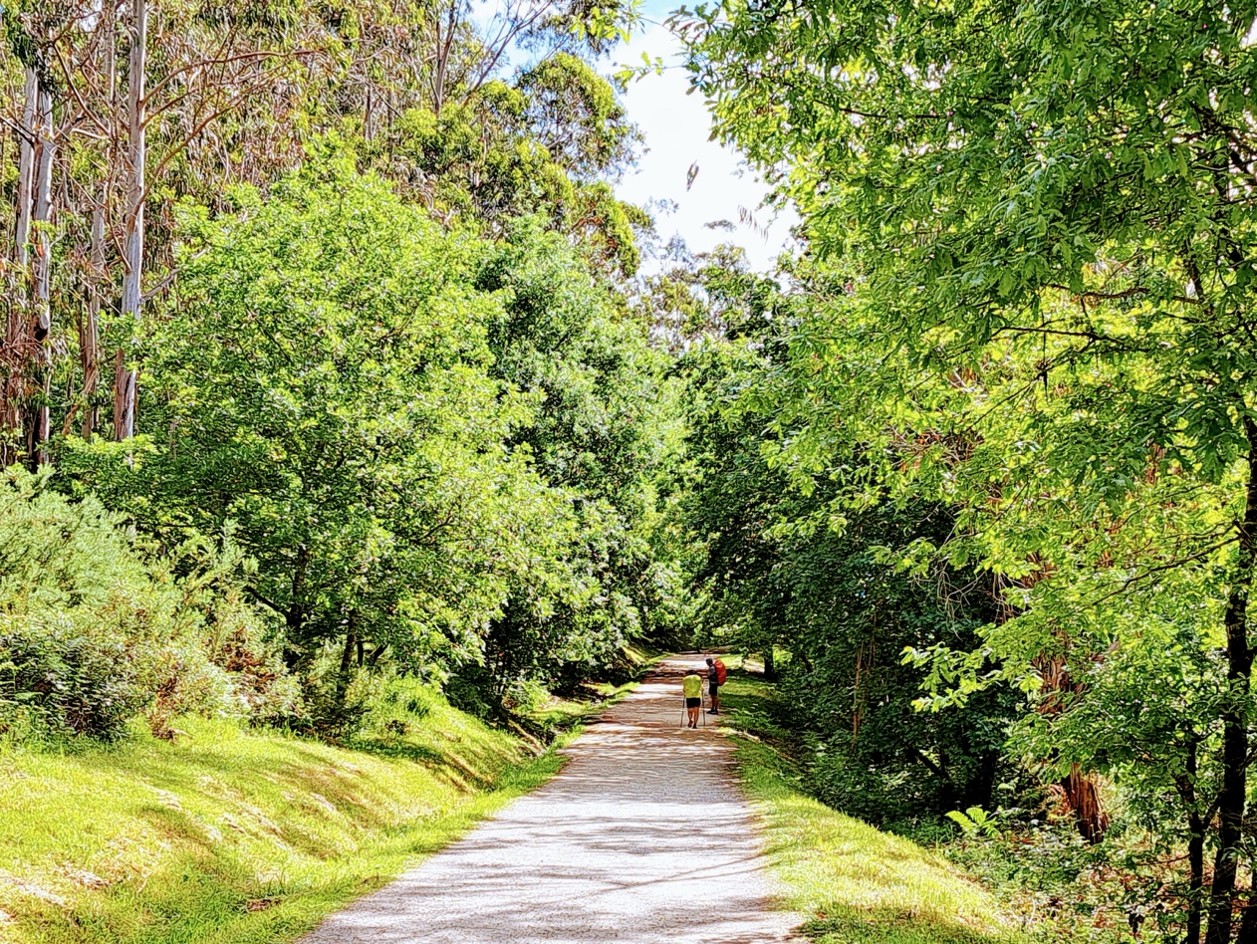
A slow pace is the key to opening up to others; throughout the day, it comes naturally to change walking companions; an endless dialogue takes place between people of different cultures and backgrounds. Wishing someone a ‘good journey’ is more than a mere courtesy; it is a recognition of the other person and of the shared effort. Breaks and rest periods provide opportunities to interact with local communities, appreciating the value of hospitality and the local area.
Other aspects contribute to making walking a form of ‘therapy’ – a tool for personal and collective growth – in the light of positive values that are useful for building a peaceful society that respects human values: at the end of each stage, there is a moment of reflection where everyone is invited to share their life experience, with its positives and negatives; this form of sharing brings relief and fosters awareness. Shared values and active listening help us discover just how similar we are and how we are united by identical emotions and feelings. These are opportunities to revisit our past and use it to shed light on the present, working to understand who we are and where we are heading.
Travelling on foot, at a leisurely pace, through dialogue, encounters and reflection, teaches us that our relationships with others are rich but also difficult and complex. We learn to manage conflict; the difficulties of the journey (tiredness, rain, disagreements) are tackled and shared effectively, with careful attention to intercultural aspects. The offer of mutual support arises spontaneously: on the toughest climbs, when coping with illness and bad weather, we encourage one another, transforming fatigue into a social bond.
Walking is therefore the first of these good practices. Stripped of all the trappings that categorise and divide us, we return to being ordinary human beings – women and men who are increasingly lonely and frightened – engaged in their material and spiritual evolution, a journey in which they rediscover the importance of others and of a social system founded on dialogue, sharing, understanding and peace. The place where Europe’s values are put into practice: millions of people who believe in freedom, democracy, the rule of law and respect for human dignity.
Umberto Gallo – Accoglienza Pellegrina – Hosvol Italia member of the steering committee of Camino Europa Compostela


 As we said in the August newsletter, the ADRIA CAMINO FESTIVAL took place in Sibenik, Croatia, from September 26th to 28th, and our association participated. It was an interesting opportunity to discuss the routes to Santiago originating in Eastern European countries and to analyze phenomena related to the development and evolution of pilgrimages. AP participated in the events on hospitality, a fundamental element for the existence of devotional routes, and also promoted the two most significant routes in the area: the Via Francigena and the Via Postumia. In Sibenik there is one of the most beautiful cathedrals dedicated to St. James. A long walk on part of the Croatian route was also included, with a large group of pilgrims. In an atmosphere of brotherhood and sharing, we initiated collaborative projects with representatives of associations in Slovenia, Poland, and Ukraine, and consolidated those with our traditional partners.


